In conventional garment production, fabric is dyed before it's cut and sewn. The color goes on under tension, in a uniform process, and the resulting fabric is consistent and predictable. That predictability is part of the problem.
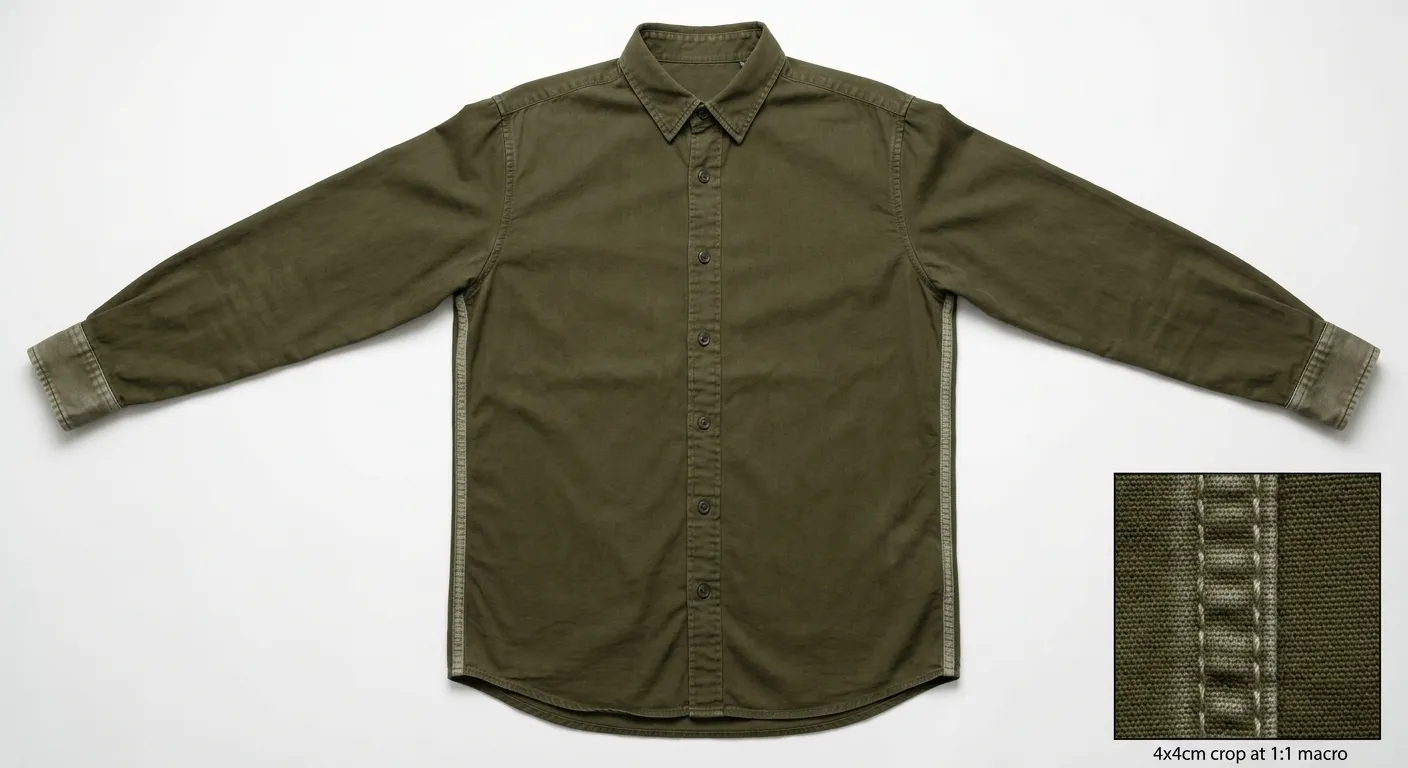
Garment dyeing reverses the sequence. The garment is cut, sewn, and assembled first, in its natural or undyed state, then submerged in dye as a finished object. Because the dye interacts with the seams, stress points, fold lines, and thread at the same time as the shell fabric, the color deposits unevenly. Seams resist dye differently than open panels. Corners and edges catch more color. Thread, often polyester, doesn't take dye the same way cotton does.
The result is a color that looks lived-in immediately. Not faded, but complex: lighter at the seams, darker in the flat panels, with a slight variation that reads as depth rather than inconsistency. It's the reason a garment-dyed olive shirt looks different from a piece-dyed one in the same colorway.
The softness is the other variable. When a sewn garment goes into a dye bath, the heat and mechanical action of the process relaxes the yarns. The fabric has already been under construction tension; the dye bath releases it at the fiber level. That relaxation produces a handle, which is the textile industry's term for how a fabric feels in the hand, that pre-dyed fabric doesn't achieve until after repeated washing.
The softness isn't from a softener. It's from tension released during the dyeing process at the fiber level.
The tradeoff is color consistency and longevity. Garment-dyed pieces change slightly with each wash as the loose surface dye washes out and the deeper dye continues to settle. The color stabilizes after six to ten washes. During that period, wash with similar colors. After that, the piece is colorfast enough to mix freely.
Verdict: Seek out garment-dyed pieces for anything you plan to wear frequently and launder regularly. The color will shift slightly but stay honest. Brands doing this well: Corridor, Orslow, Hartford, Universal Works. Avoid it for tailored pieces where consistent surface color is load-bearing.


