Spring 2026 Subscribe to Next Rewind
Monday, July 20, 2026
NextRewind
▸ Section ◂

Gear

Bags, audio, tools, and the everyday objects built to wear in.
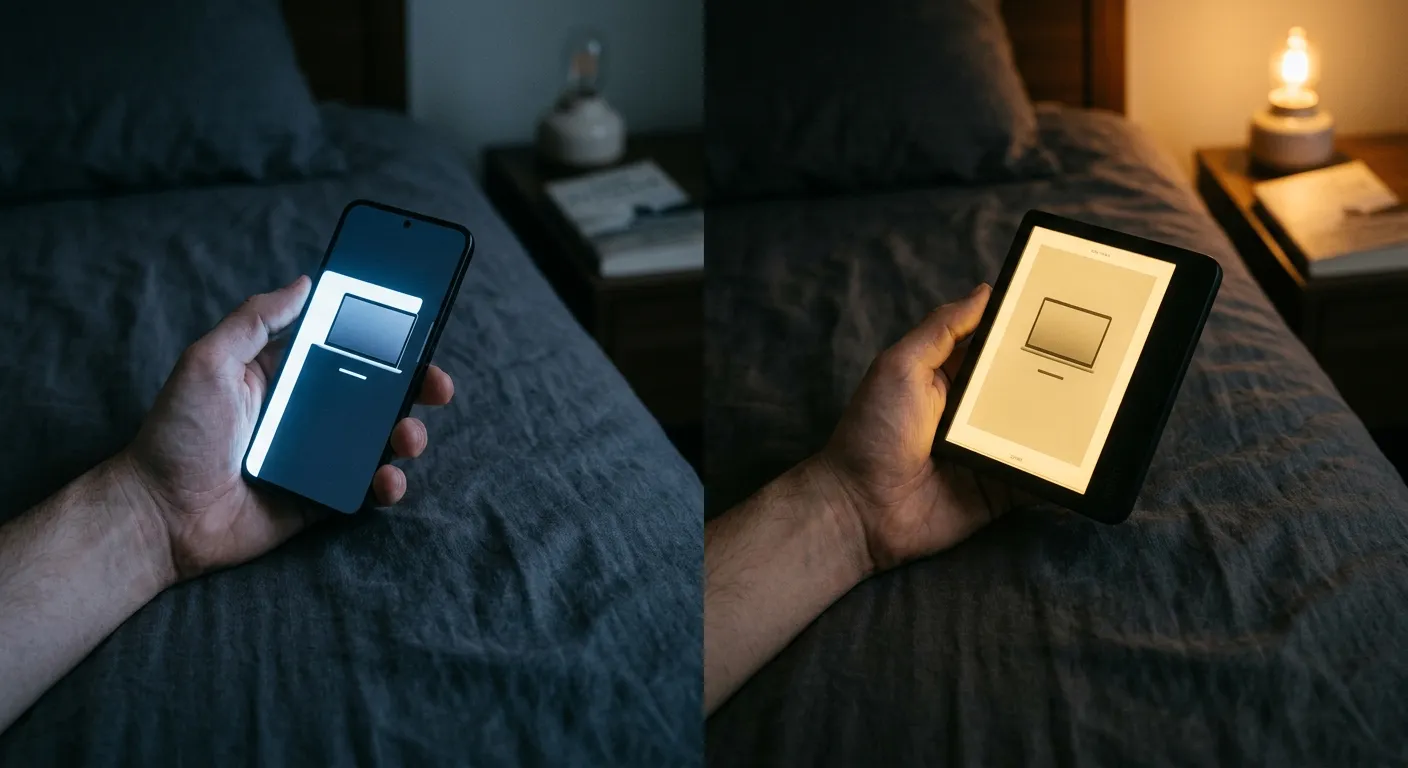
A split-frame photograph shows a side-by-side comparison of reading at dusk in a dark bedroom. On the left, a hand holds a smartphone, its screen emitting a bright, cool-toned blue-white light that illuminates the surrounding hand and bedsheets. On the right, the same hand holds a Kobo e-reader, which features a warm-amber front-lit screen that appears more like a soft, reflective surface. The background of both images is identical, featuring a dark linen bedsheet, a small lamp with a warm incandescent glow, and a book on a nightstand.
Gear

E-Ink as a Cognitive Tool: The Physics of Reduced Eye Strain

An OLED display generates light to overcome the room. An e-ink display reflects light that is already there. That difference, before sleep, is not a preference. It is a measurable neurological input.
March 9, 2026
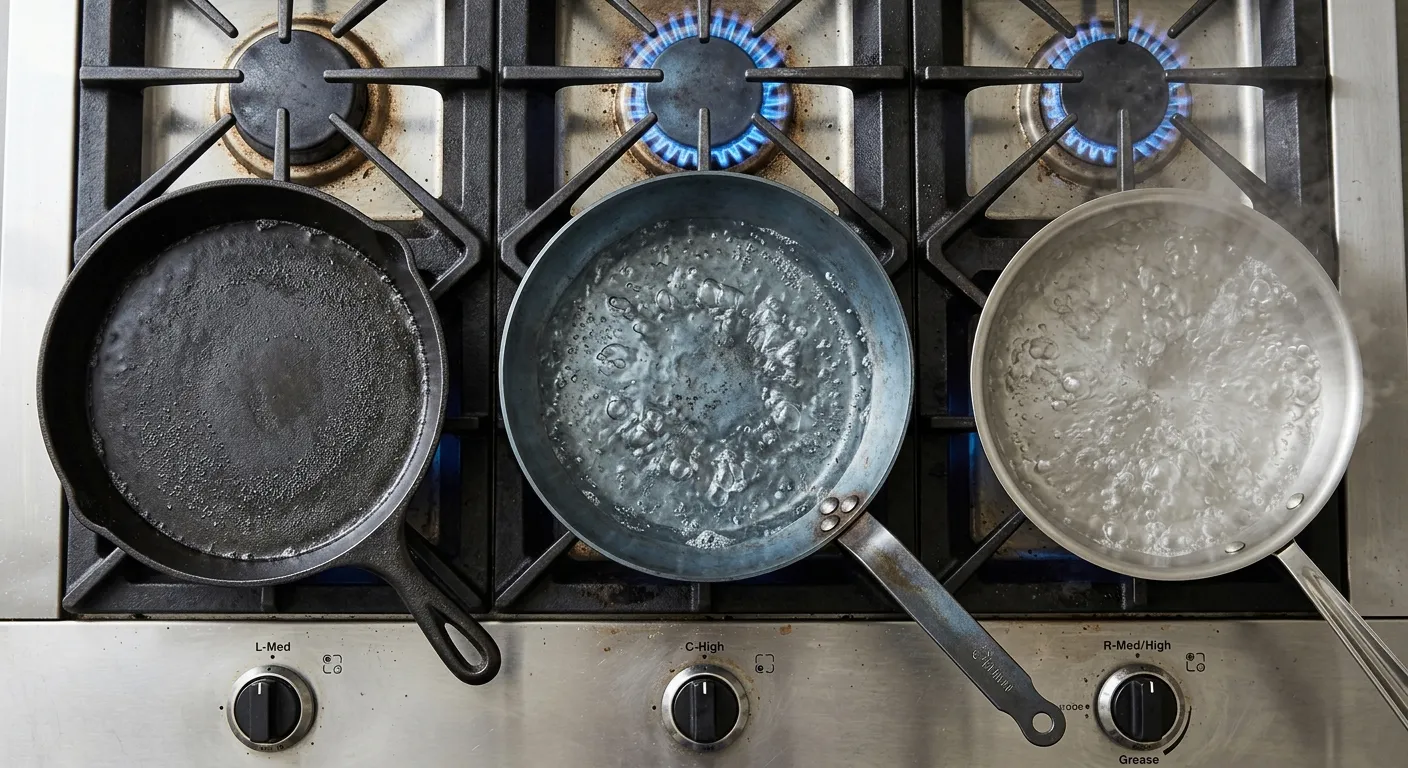
An overhead, slightly angled photograph shows three distinct metal pans on a six-burner gas range, each heating a pool of water at different stages. On the left, a matte black cast iron skillet contains water just beginning to simmer at the edges. In the center, a blue-gray carbon steel saute pan holds water at a rolling boil. On the right, a stainless steel skillet with a riveted handle contains water at an aggressive, full boil. The stainless steel stove features cast iron grates with cobalt blue flames visible beneath each pan, and control knobs labeled with heat settings at the bottom.
Gear

Thermal Mass on the Stovetop: Cast Iron vs. Carbon Steel vs. Clad Stainless

The right pan is not about tradition or brand loyalty. It is about how much thermal mass your burner can actually drive, and matching the metal to that number.
May 20, 2026
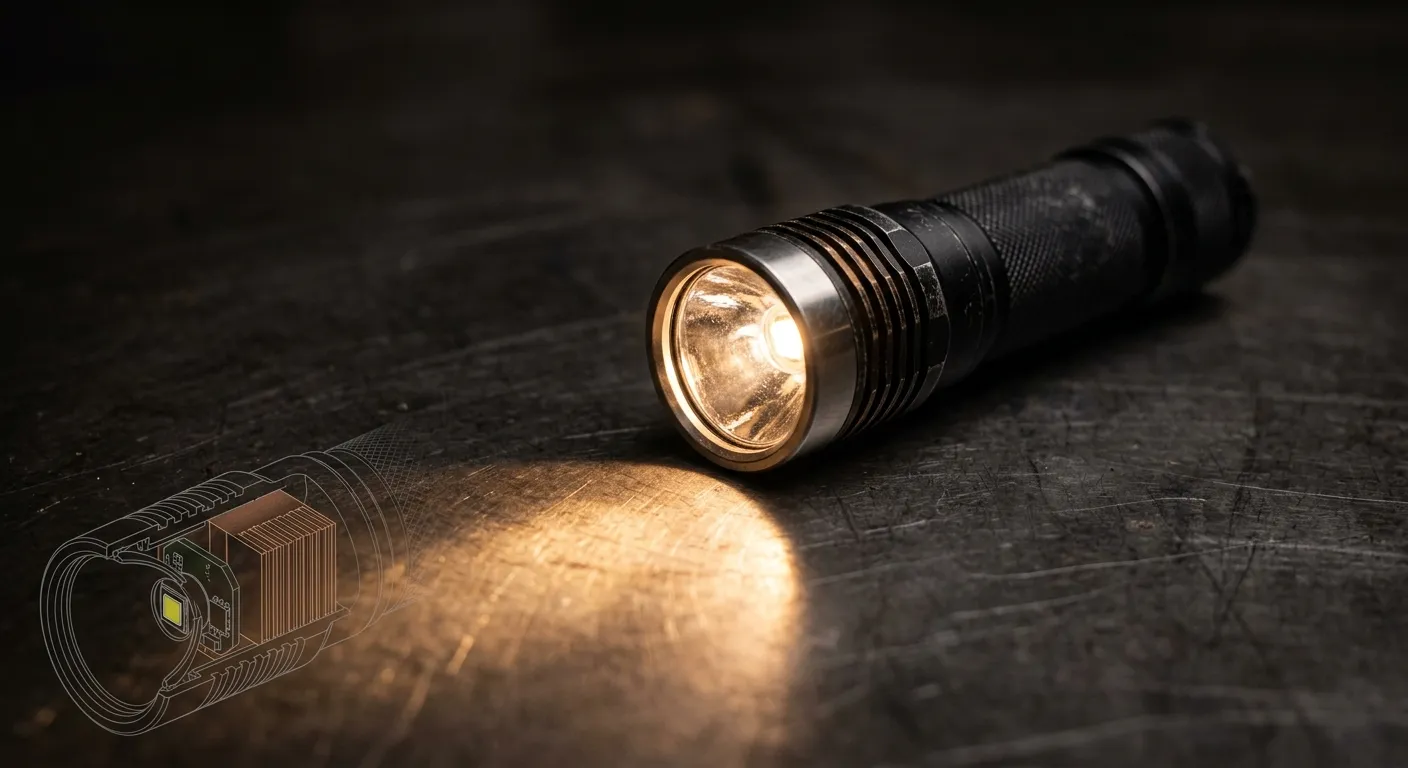
Low-angle shot features a compact, black aluminum 21700-cell EDC flashlight resting on a dark, textured steel surface. The flashlight is turned on, casting a warm, amber-tinted circular beam pool onto the metal surface in front of it. In the lower-left corner, a ghosted, thin-lined editorial cutaway diagram shows the flashlight's internal heatsink fin structure and LED emitter. The image has a shallow depth of field, with the focus sharp on the machined silver bezel and the warm, textured head of the flashlight.
Gear

The Lumens Lie: Thermal Throttling in Pocket Flashlights

A two-thousand-lumen rating is a ninety-second performance. What the light does at thirty minutes is the only number worth reading.
May 6, 2026
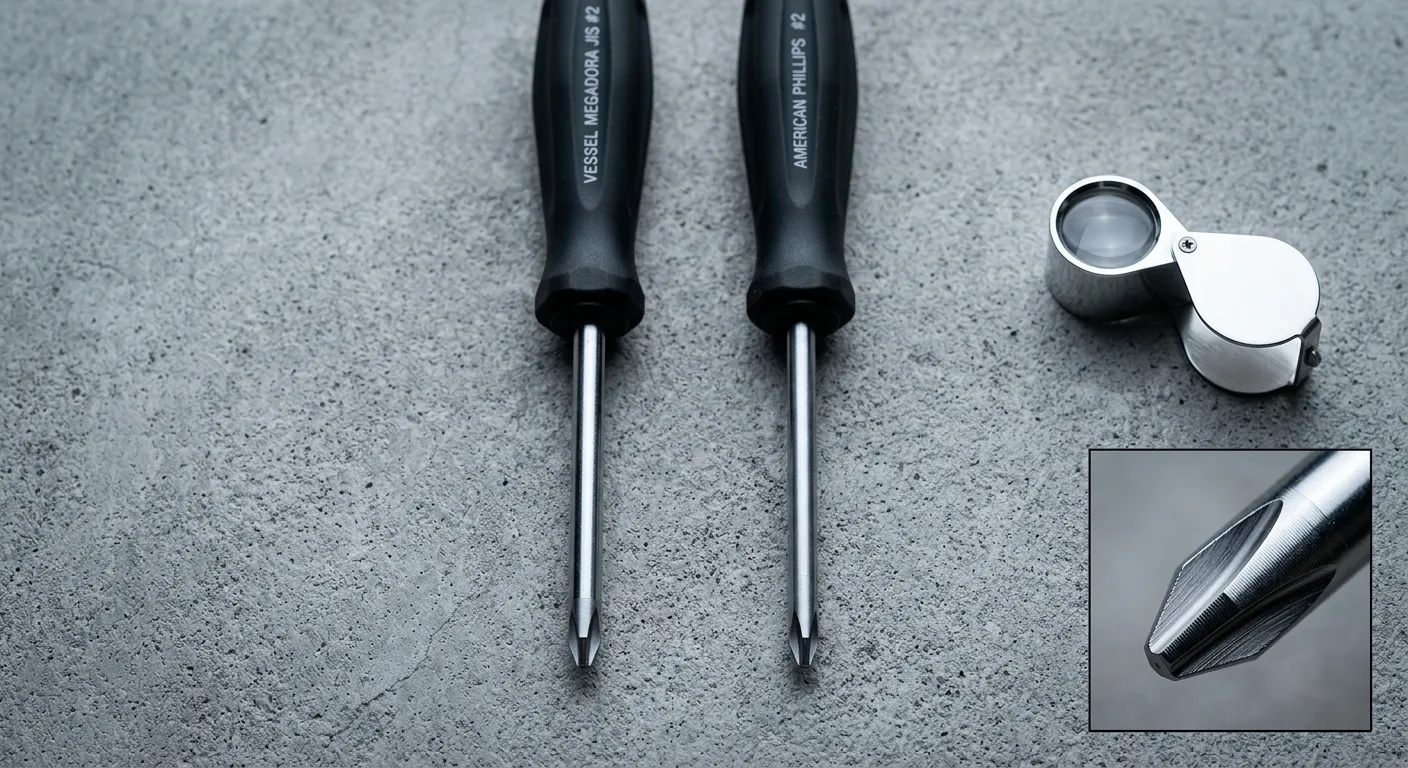
A top-down macro photograph on a cool-gray, matte concrete surface featuring two cross-point screwdrivers positioned side by side. The driver on the left is a Vessel Megadora JIS #2, and the driver on the right is an American Phillips #2, both with matte black handles and chrome steel tips. To the right of the screwdrivers, a jeweler's loupe rests on the concrete, slightly out of focus. A small, square inset frame at the bottom-right shows an extreme close-up of the JIS driver's tip, highlighting the precise, tight flank geometry of the metal. The image uses editorial, directional lighting to emphasize textures and materials.
Gear

The JIS Distinction: Why Your Tool Kit Is Stripping Your Gear

The screw head is not stripping because you used too much force. It is stripping because Phillips and JIS look identical and they are not.
May 1, 2026
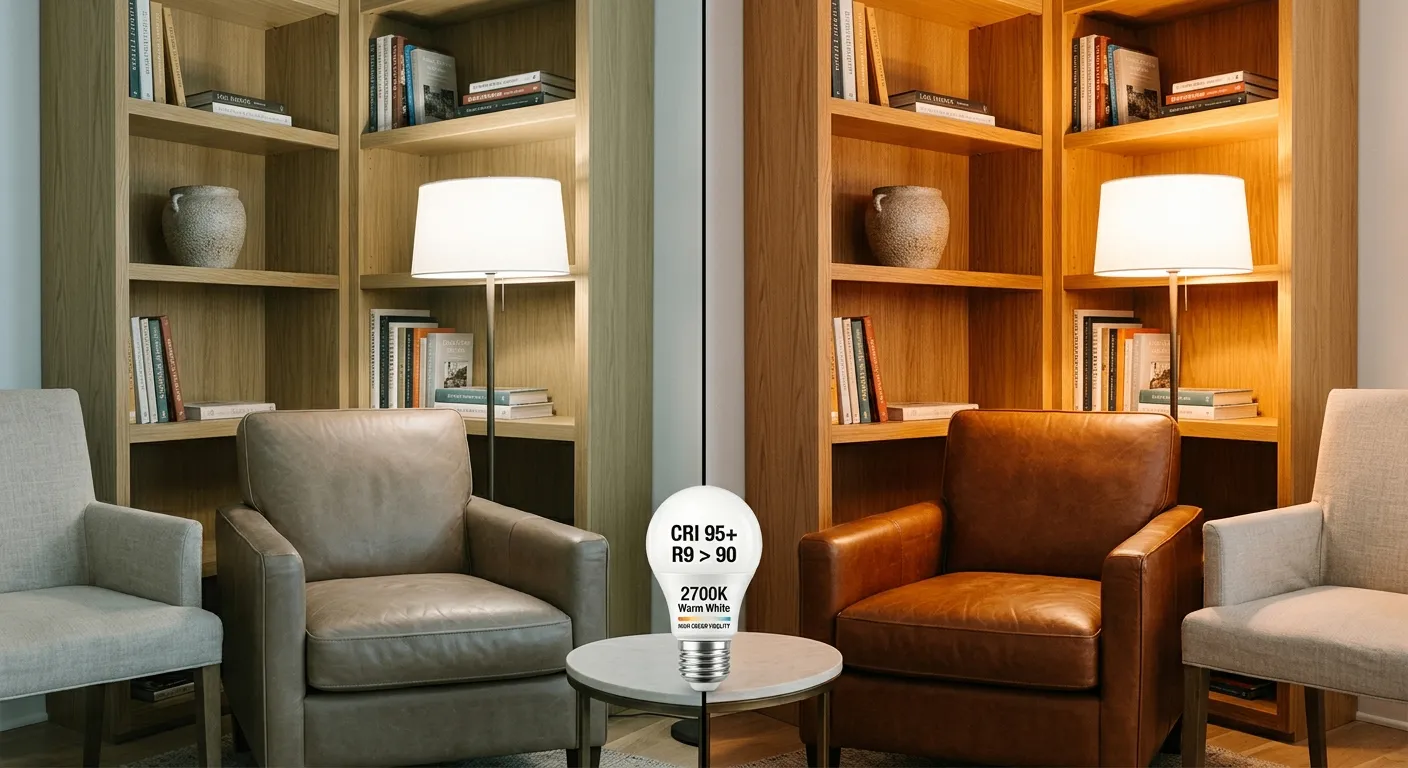
A split-screen editorial photograph comparing lighting quality in a living room corner. The left side, lit by a CRI-80 bulb, renders the leather armchair in a muted, grayish tone and the oak bookshelf in a greenish-tan hue. The right side, lit by a CRI-95 R9-90 bulb, shows the armchair in a rich cognac brown and the oak wood in a warm amber. A single E26 LED bulb sits on a small table at the center seam, with a label displaying "CRI 95+ R9 > 90" and "2700K" facing the camera.
Gear

The Color Rendering Index in Your Living Room

Your living room looks slightly wrong and you have adapted to it. The number on the bulb package that explains why is CRI, and most manufacturers bury the one sub-score that actually matters.
April 30, 2026
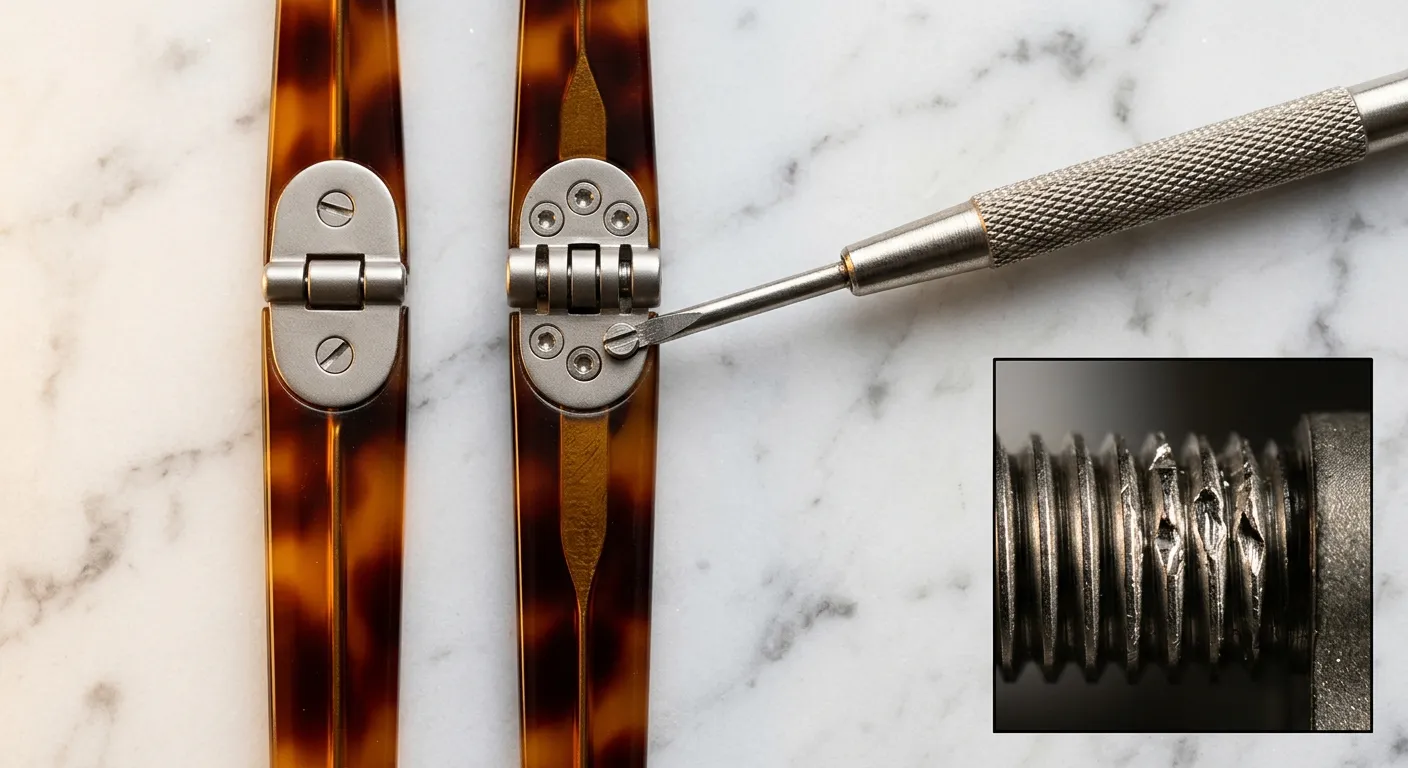
A macro photograph on a white marble surface features two tortoise acetate eyeglass temples laid flat. The left temple shows a two-barrel hinge, while the right features a five-barrel hinge. A precision flat-head screwdriver rests diagonally across the composition, with its tip positioned near a hinge screw. An inset at the bottom-right provides a near-microscopic view of a single stripped barrel thread.
Gear

The Anatomy of Hinge Fatigue in Eyewear

Glasses do not go loose because they are cheap. They go loose because the hinge type determines the failure mode, and most frames are built for neither repair nor longevity.
April 27, 2026
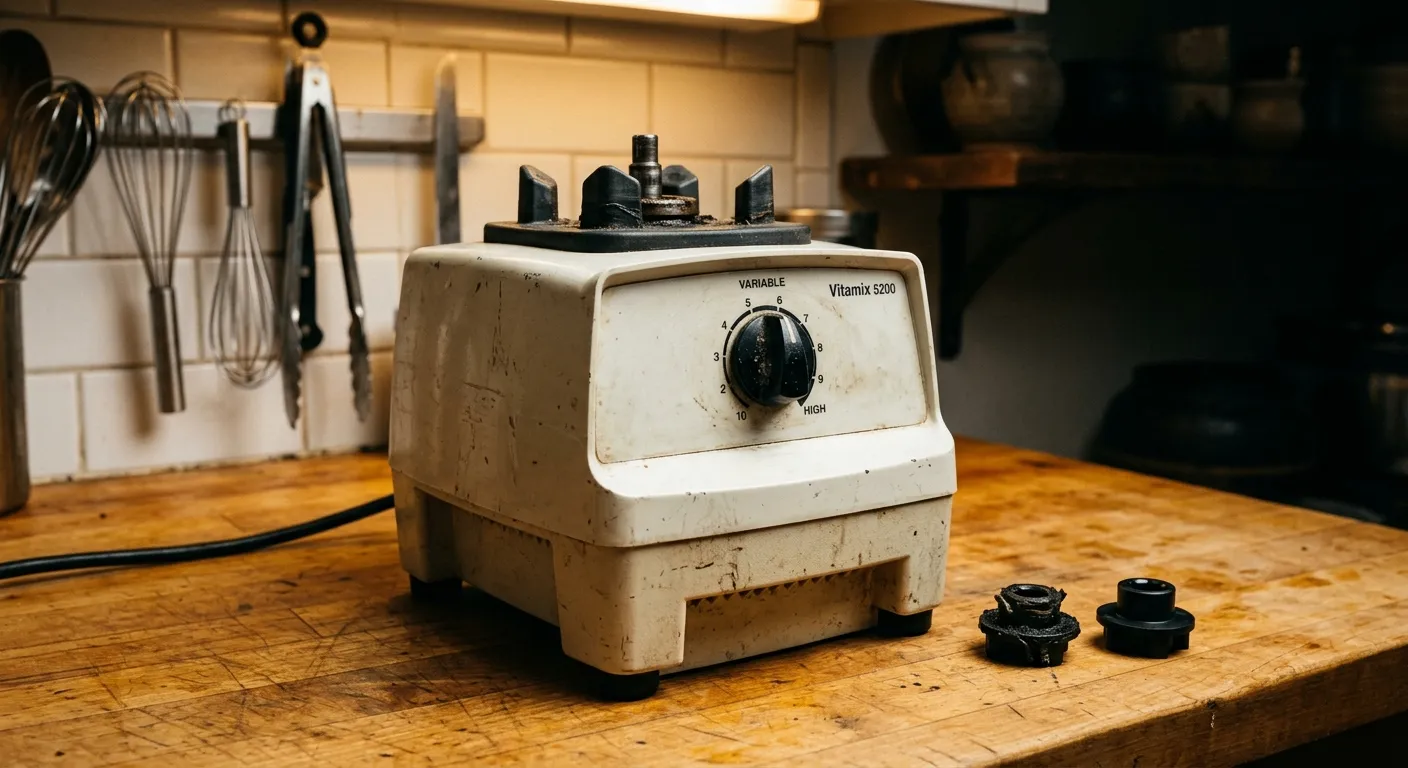
An eye-level photograph of an aged, off-white Vitamix 5200 blender base sitting on a well-worn wooden butcher-block countertop. The blender container is removed, exposing the drive socket and motor spindle on top of the base. On the counter to the right of the blender, two black drive socket couplings are placed side-by-side, one showing visible wear and the other appearing new. The background features a white tiled kitchen backsplash, hanging wire whisks, and warm ambient lighting.
Gear

The 15-Year Blender: Why Legacy Motors Endure

A copper-wound AC motor with a bimetal thermal switch has no firmware to corrupt and no touchscreen to delaminate. That is why a 2009 Vitamix is still running in 2026.
April 6, 2026
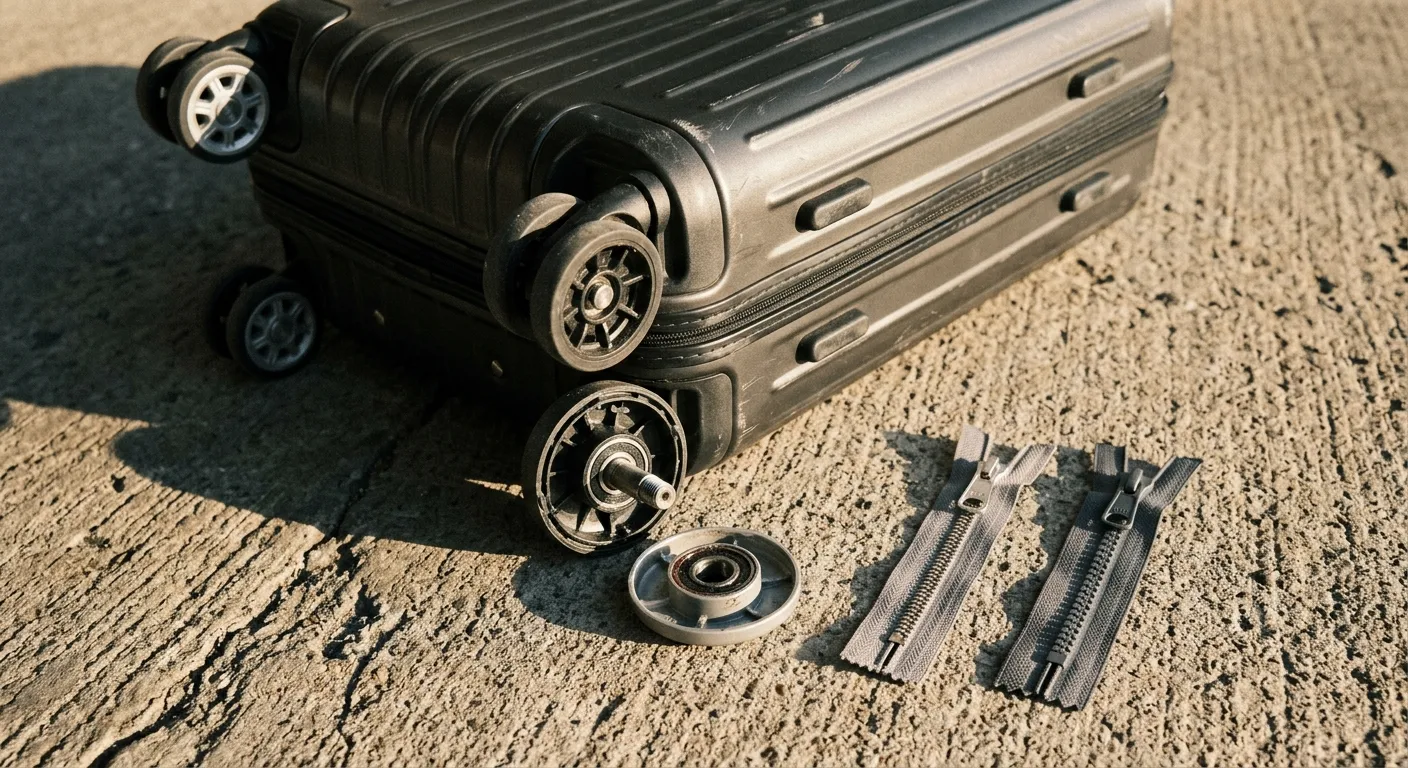
An editorial photograph featuring a charcoal grey polycarbonate hardshell suitcase lying on its side on rough urban concrete. The luggage's wheel assembly is directed toward the camera; one wheel is partially disassembled with its hub cap resting on the concrete, exposing the axle stub and a bearing insert. To the right of the bag, two YKK zipper segments are laid out: a coil zipper on the left and a molded-tooth zipper on the right, both showing distinct tooth geometry. The scene is captured in warm late-afternoon sunlight, creating hard, raking shadows across the concrete texture.
Gear

Hinge and Zipper Stress: Where Travel Bags Actually Die

The shell material on your luggage is irrelevant. Bags die at the zipper slider, the wheel axle, and the telescoping handle collar, in that order.

March 27, 2026
The Next Rewind Newsletter

A note on what's worth Rewinding on.

Honest writing on the gear, garments, and small objects worth your attention, and worth keeping. No clickbait, no countdown timers.