Glasses lose their grip at the temples before anything else, and it almost always comes down to hinge design rather than frame material. Understanding the difference between hinge types is the only way to evaluate a frame before it costs you two hundred dollars and six months of progressive tightening.
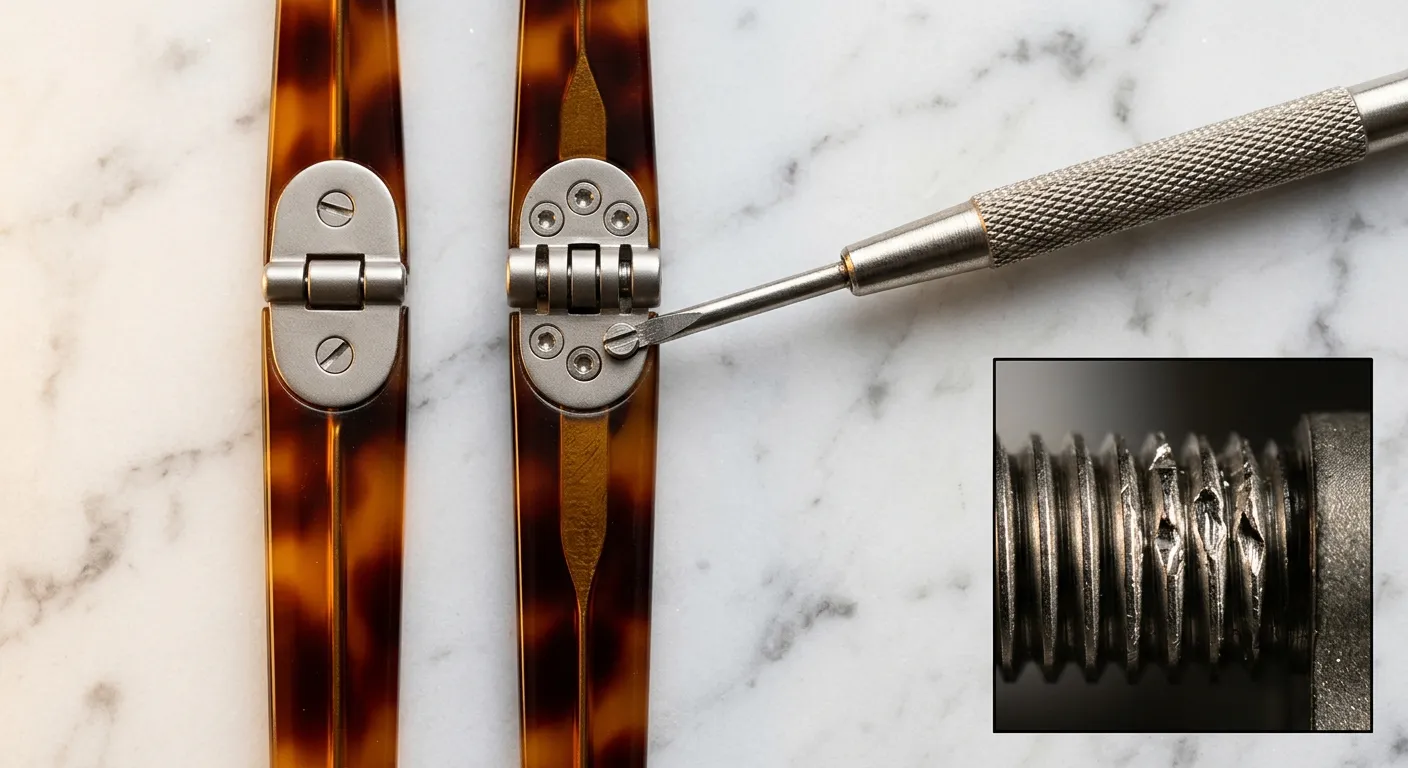
A standard barrel hinge works by threading a small screw through interlocking knuckles on the front and temple pieces. The screw is the failure point. As the hinge cycles through open and close, the screw backs itself out incrementally due to vibration and the slight angular variation in how each person opens their glasses. Once the screw backs out enough, the hinge goes loose. The fix is tightening the screw, which any optician does for free in twenty seconds. The long-term problem is that repeated retightening in the same thread path eventually strips the barrel, usually in the front piece, which is the harder component to repair.
Five-barrel hinges, used on higher-end acetate frames, divide that same load across five interlocking knuckles rather than one or two. More contact surface means more friction resistance to screw backing. The screw still loosens, but the rate is slower and the stripped-thread failure arrives later, sometimes never within a reasonable service life. Lindberg, Mykita, and several Japanese manufacturers build frames around five-barrel construction as a standard practice rather than a selling point.
Spring hinges add a flexion mechanism behind the barrel that allows the temple to extend beyond the standard open position. The spring absorbs the load when the glasses are taken on and off carelessly or stored with pressure on the temples. The failure mode shifts: instead of a stripped barrel, you eventually see a broken spring cartridge. Most spring cartridges are held in place by a single small screw and are model-specific replacements. A frame with a spring hinge from a manufacturer with a published parts program is repairable for the life of the frame material. A spring hinge from a manufacturer without parts availability is a ticking clock.
Titanium frames present a different set of variables. Titanium is lighter and more corrosion-resistant than stainless steel, but the hinge screws used in titanium frames are typically smaller gauge than those in acetate, and over-torquing them during tightening strips the thread or shears the screw head. If you are not comfortable with a precision screwdriver and a light touch, take them to an optician for adjustments rather than trying it yourself.
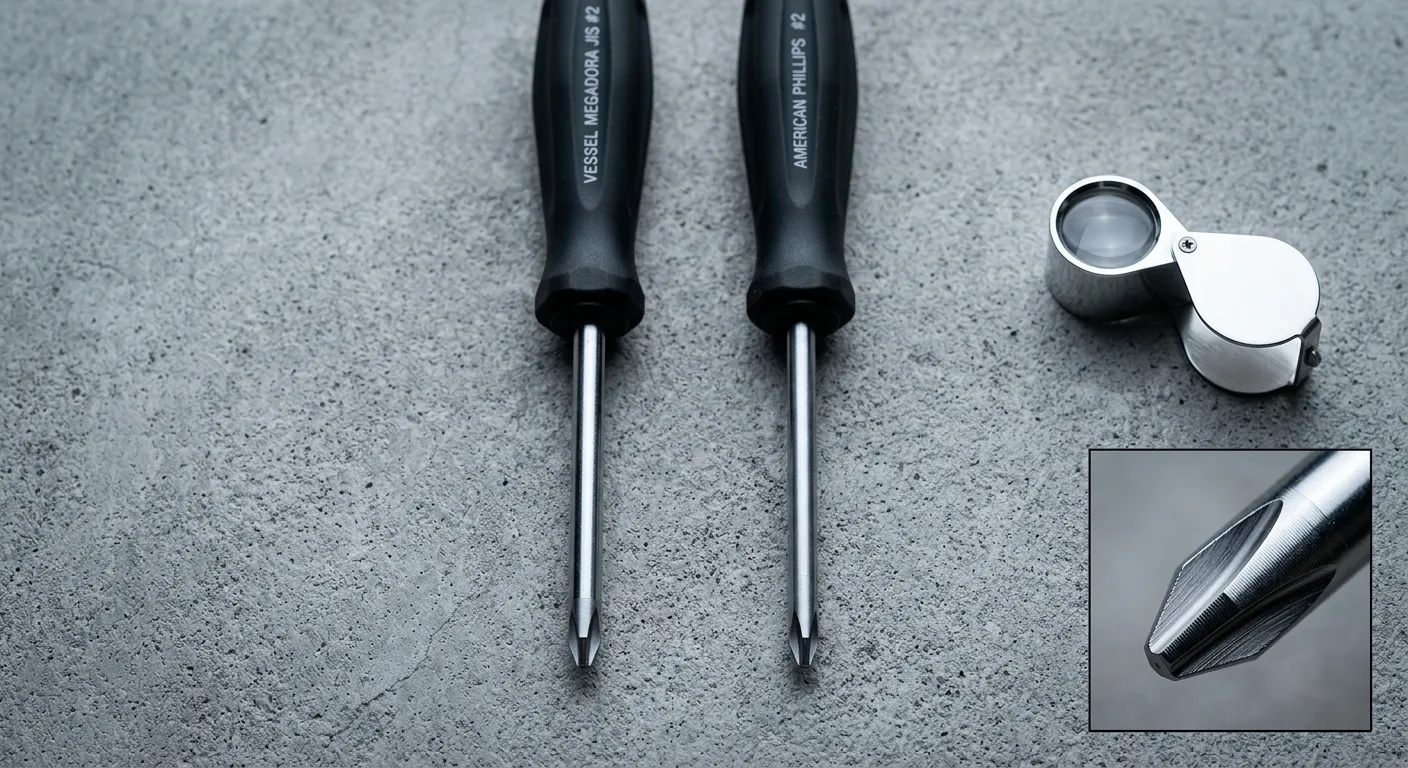
At year three, any barrel hinge will need a screw check. At year seven, a high-quality five-barrel acetate frame should still be structurally sound if it has been adjusted rather than forced. Spring hinges at year seven: inspect the cartridge for stress cracking at the housing. With titanium at any point: do not use a standard size precision driver, find the correct JIS or metric bit for the head diameter or you will strip it.
If your frames came from a brand that does not sell replacement screws or offer frame repair, your glasses are disposable goods at a non-disposable price. Shop accordingly.