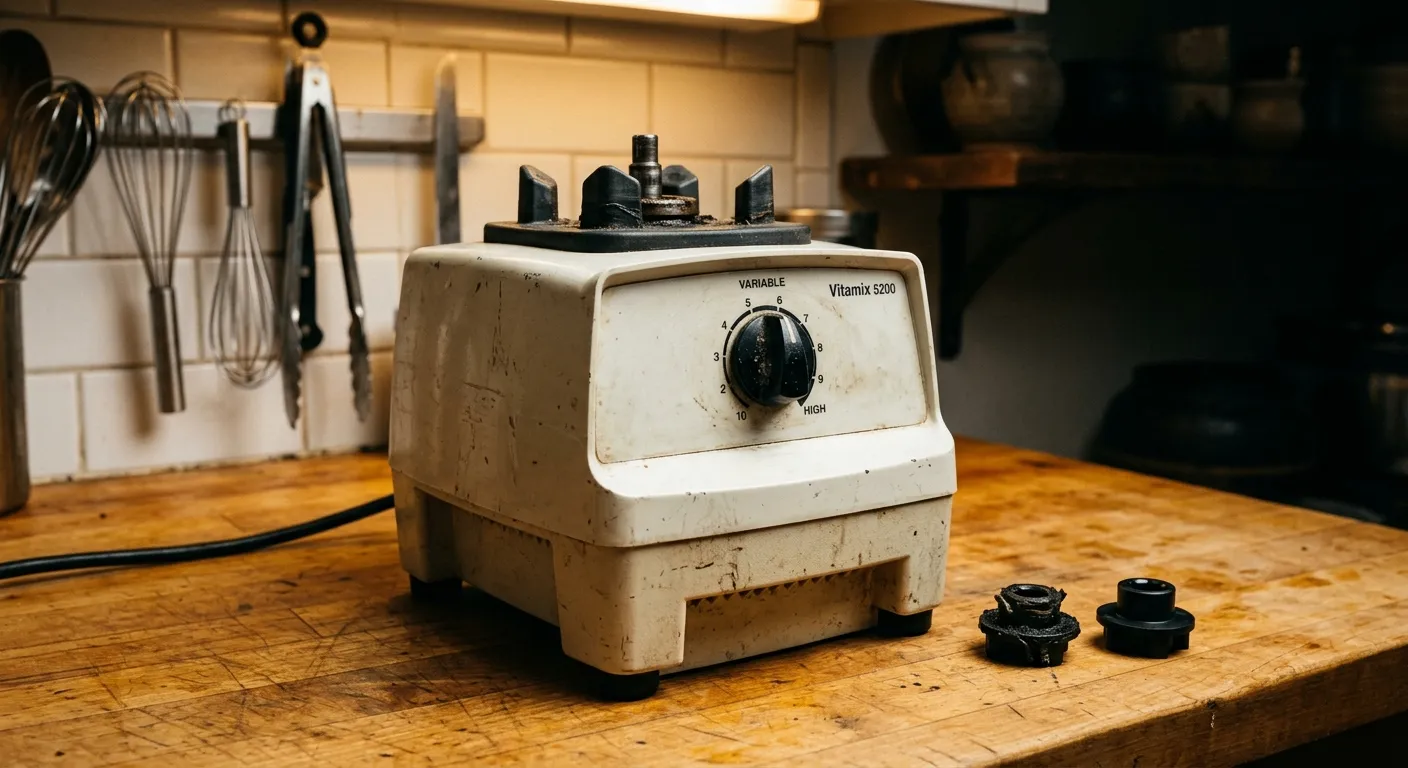
That run time is not magic. It follows from a specific set of engineering decisions Vitamix made before digital interfaces became a selling point for kitchen appliances. The 5200 runs a universal AC induction motor wound with copper, rated at two horsepower continuous. The thermal protection is a bimetal switch: a physical piece of metal that deforms at a set temperature and opens the circuit. When the motor overheats, the blender stops. When it cools, you reset the switch by pressing a button on the base. No firmware. No thermistor reporting to a microcontroller. No software update required to keep the thermal protection logic current. The speed control is a variable resistor on a dial. You can measure its resistance with a multimeter and replace it for four dollars in parts if it drifts.
The drive socket, the coupler between the motor spindle and the blade assembly, is the one part that wears on these machines with high-volume use. On the 5200, it is a four-dollar part you can order directly from Vitamix, remove with a standard socket wrench, and press-fit onto the spindle in fifteen minutes. If you use the blender daily and notice it starts to smell like burning during operation, the drive socket is almost always the cause. Buy a spare and keep it in the drawer.
Modern blender designs trade this serviceability for a quieter noise profile and a flatter control panel. Self-contained enclosures deaden sound but also trap heat and make motor access impossible without destroying the housing. Touchscreens on blenders are the kind of decision that makes sense in a product roadmap meeting and falls apart in year four when the capacitive layer delaminates and the preset buttons stop responding. You cannot repair a delaminated touchscreen on a blender. You buy a new blender.
Vitamix still sells parts for the 5200 series. Container seals, drive sockets, motor bases, tamper assemblies. If Vitamix discontinues the line at some point, the motor winding in a functioning base will outlast demand for the parts. These motors are wound to commercial kitchen duty cycles, not home use, which is why residential owners see such long service lives.
If you are buying new and the 5200 is outside the budget, look for a refurbished unit direct from Vitamix with their warranty; they recondition their own machines. The alternative at a lower price is a Blendtec Classic series with a similar commercial motor heritage, though the blade assembly replacement on Blendtec is more expensive. Stay away from any blender where the container and blade assembly cannot be separated, because blade assembly replacement is a when-not-if proposition and a sealed unit means you are replacing the container at the same cost as half a new machine.
At year fifteen on a well-maintained Vitamix, you are looking at a drive socket replacement and possibly a container seal. The motor shows no signs of stopping.