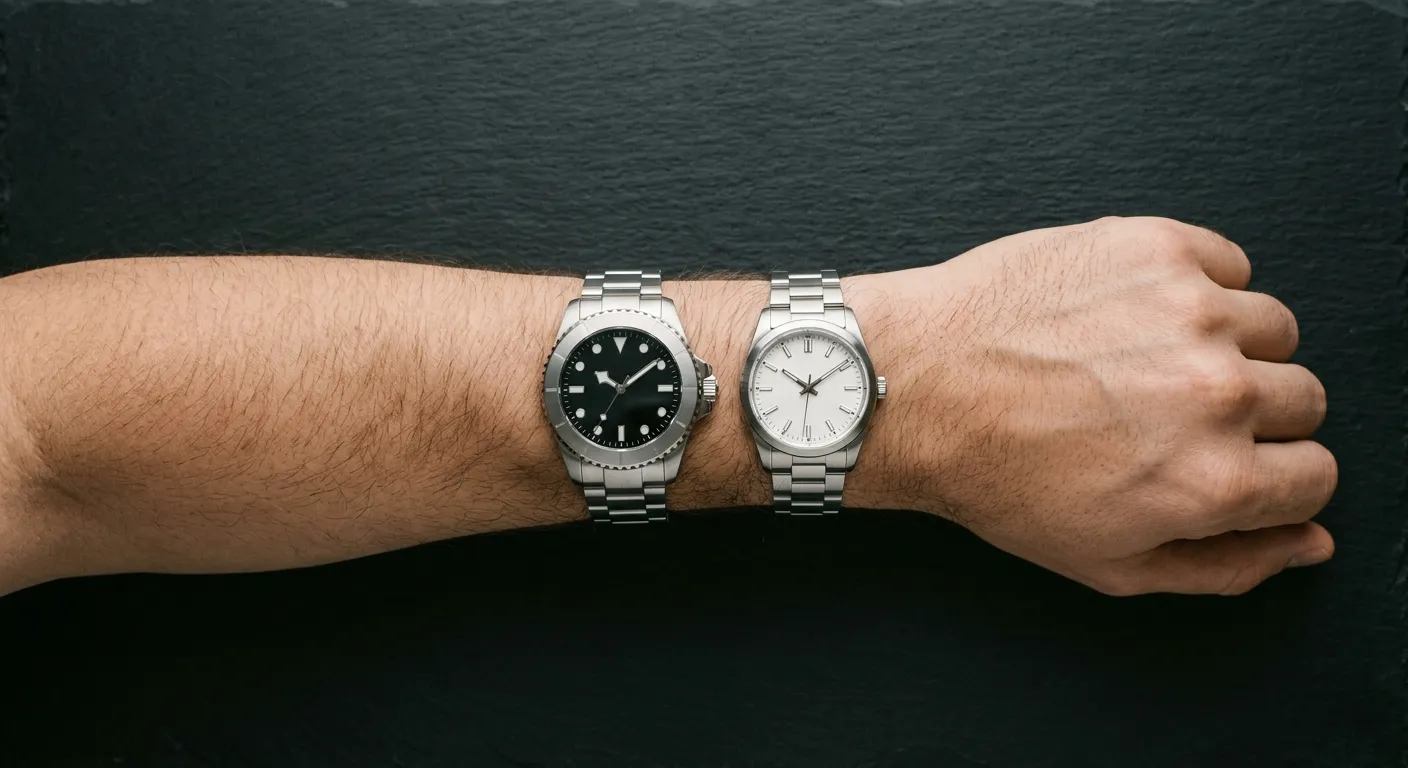
At some point between 2005 and 2015, the watch industry decided that size was a proxy for seriousness. Cases climbed from 36mm to 38mm, then to 42mm, 44mm, 46mm. Lug-to-lug measurements stretched past 50mm and started disappearing under French cuffs. The wrists could not keep up.
The correction was inevitable. What changed faster than expected was where it came from. The Swiss houses moved slowly, anchored to existing SKUs and reluctant to admit the aesthetic had aged. The micro-brands moved first, building heritage-proportioned cases because that was what their audience, which skews toward horologically literate buyers, actually wanted.
A 38mm case sits differently on the wrist. Lug-to-lug measurements under 46mm mean the watch doesn't overhang the wrist bone on either side, which is the tell that separates a watch that fits from one that's being worn. At a 10mm or 11mm case height, it clears a shirt cuff cleanly. These are not aesthetic preferences; they are the conditions under which a watch becomes invisible, which is when a watch is doing its job.
The high-beat movement is part of the package on most current micro-brand offerings. A 28,800 bph oscillator gives the seconds hand a smooth sweep rather than the lurching tick of a 21,600 bph movement. It's more accurate under motion. It also costs more to service, which buyers should know before they buy.
Brands worth watching in this space: Monta, Farer, Halios, Baltic. Prices run from $400 to $1,200. Most use Swiss ETA or Sellita movements, reliable enough that servicing intervals can extend to seven to ten years with clean storage. Cases are mostly stainless, a few titanium at the upper end.
A 44mm watch signals effort. A 38mm watch signals certainty. That's the whole shift.
Verdict: Buy a 38mm now if you want something that ages better than fashion. Skip it if you want a statement piece. The alternative: Seiko SPB143, 38mm, mechanical, under $500.


