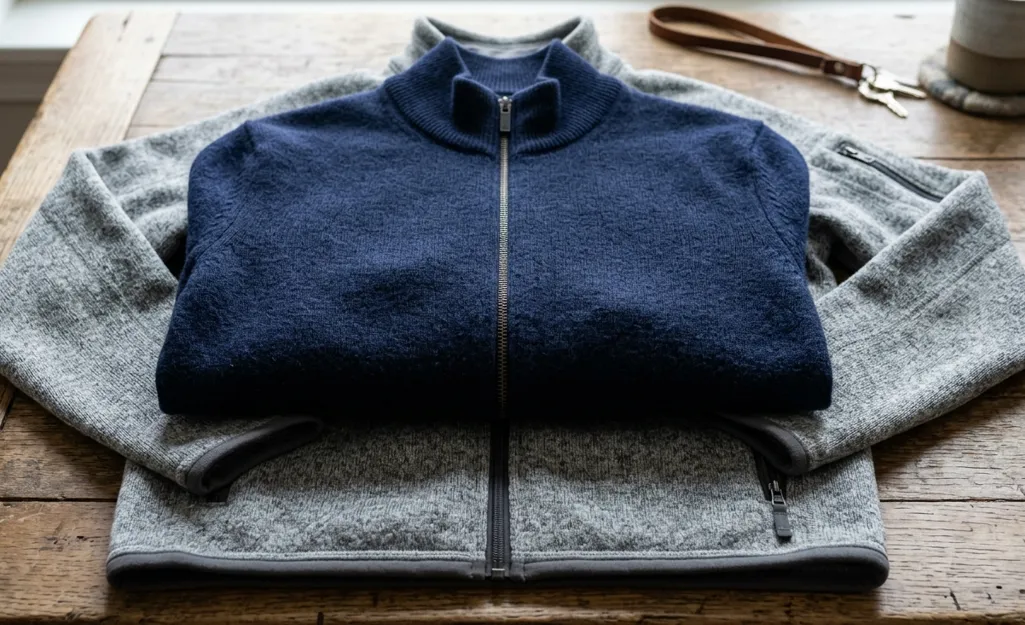
The wardrobe problem is simple: the old tech uniform stopped signaling competence and started signaling autopilot.
For nearly two decades, the Silicon Valley default was predictable. Patagonia vest over a button-down. Company hoodie. Performance quarter-zip. Slim jeans. The logic made sense. These were lightweight, durable garments built for climate-controlled offices and long hours at a desk. Utility came first. Style was treated as a distraction.
The problem is that every startup founder, product manager, consultant, and aspiring founder adopted the same formula. A uniform that once communicated focus eventually communicated conformity.
The shift away from that look has been gradual. You see it in what replaced the fleece vest. Fine-gauge merino knitwear. Unstructured wool blazers. Pleated trousers cut with room through the thigh. Leather loafers instead of Allbirds. Suede jackets where synthetic shells once dominated.
The common thread is not formality. It is intentionality.
Modern tech workers are dressing more like architects, creative directors, and industrial designers than software engineers from 2014. The goal is still comfort, but comfort now comes from material choice and fit rather than overt performance branding.
Merino wool is a good example. A 16 to 18-micron knit regulates temperature well enough for an office, resists odor, and layers cleanly under outerwear. It performs many of the same functions as a synthetic quarter-zip without looking like conference swag.
Tailoring has changed too. The jackets succeeding in this environment are rarely structured business suits. They are soft-shouldered wool jackets, often unlined or half-lined, built to move. Paired with drawstring wool trousers or fuller-cut chinos, they offer most of the comfort of casual wear while looking considered on video calls, client meetings, and dinners after work.
The watch market reflects the same transition. Large luxury sports watches remain popular, but many younger executives are moving toward smaller case sizes, simpler dials, and watches chosen for design quality rather than visibility. A 36mm field watch or hand-wound dress watch fits the mood better than a wrist-sized announcement.
What makes this shift interesting is that it mirrors the maturation of the industry itself. Early startup culture rewarded signaling speed. Today's professionals are more likely to signal judgment.
That changes what survives in the closet.
The branded fleece becomes a dog-walking jacket. The conference hoodie moves to the gym bag. The pieces that remain in weekly rotation tend to be quieter: navy merino crewnecks, brown suede, grey wool trousers, black loafers with resoleable construction.
None of these garments are particularly exciting on a hanger. That's usually a good sign. Novelty burns off quickly. Clothes that continue working after two years rarely need to introduce themselves.
Buy into this shift if your wardrobe still relies heavily on startup merchandise and synthetic performance layers. Skip it if your work environment genuinely requires technical outerwear or industrial durability. A good place to start is the classic navy merino crewneck from John Smedley. It solves many of the same problems as the old quarter-zip, with far fewer reminders that you attended a conference in 2018.


