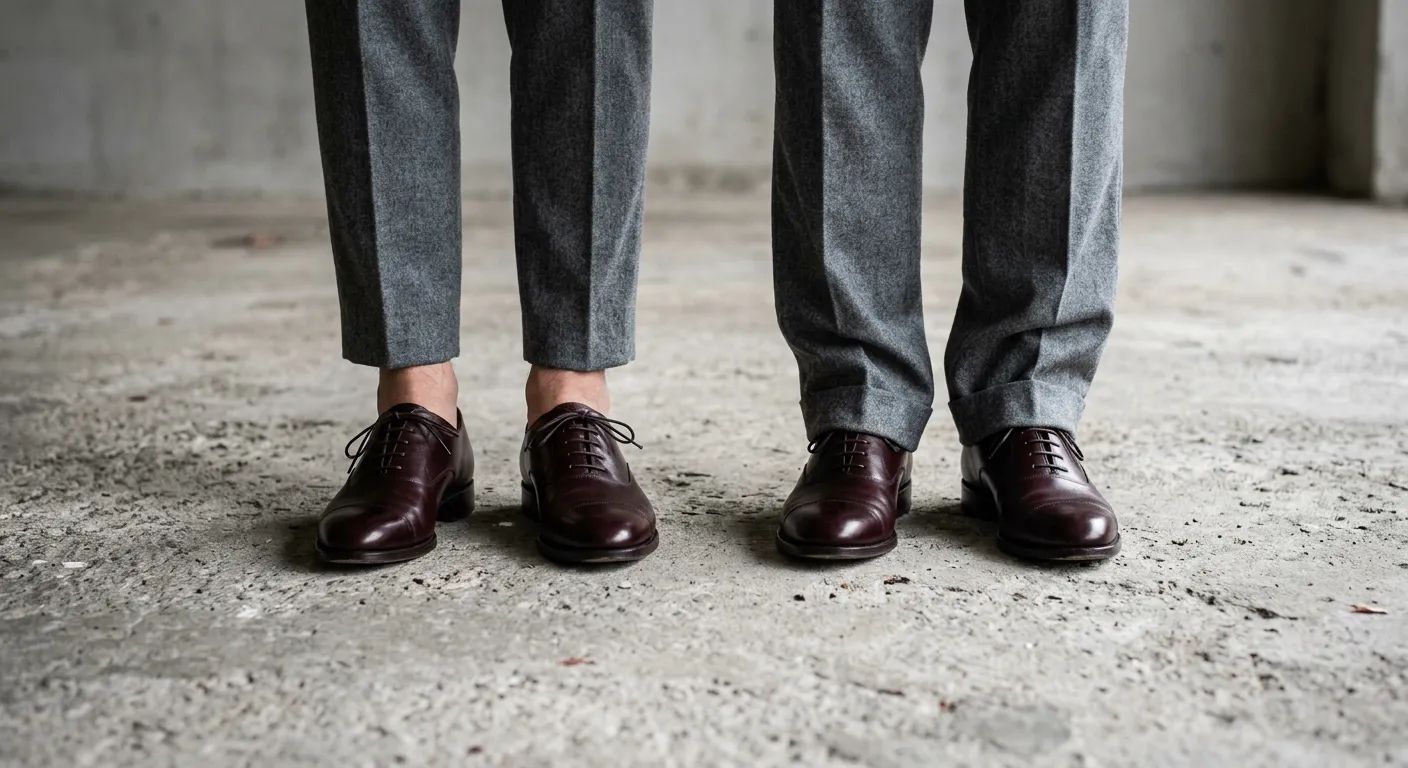
The break in a trouser leg is the amount of fabric that rests on the shoe. A full break puddles. A half-break touches the top of the shoe with a soft fold. No break ends at the ankle bone or just above it. Each creates a different silhouette, and each requires a different shoe.
A cropped trouser with no break exposes the ankle. In cooler months this reads as considered rather than sloppy only if the shoe is clean and the sock is either absent or matching the trouser. A suede loafer or a clean leather Oxford works. A chunky running shoe undermines the proportion entirely, regardless of what anyone says about high-low dressing.
The wider, shorter trouser, which arrived in earnest around 2018 and has held its ground, changes the geometry of the shoe. A wide-leg cropped trouser at mid-calf shows so much shoe that the shoe must be interesting. A slim cropped trouser at the ankle narrows to the foot and makes a case for a fine, low-profile shoe.
Rise matters more than most guides acknowledge. A high rise, at or above the natural waist, lengthens the leg visually and makes the cropped hem look intentional rather than just short. A mid-rise or low-rise with a cropped hem reads as truncated. The high-rise cropped trouser is also more comfortable to wear all day, which is a reason to try it before dismissing it as a fashion affectation.
The break is not a rounding error. It is the decision. A tailor can adjust a hem in fifteen minutes for under twenty dollars. There is no reason to wear a trouser at the wrong length once you know what the right length looks like on your body.
Verdict: A cropped trouser with no break is a specific aesthetic commitment. Get it wrong by one inch and it reads as a mistake. Get it right and the silhouette gains ten years of relevance. The alternative for less commitment: a regular-length trouser with a half-inch break, rolled once.


