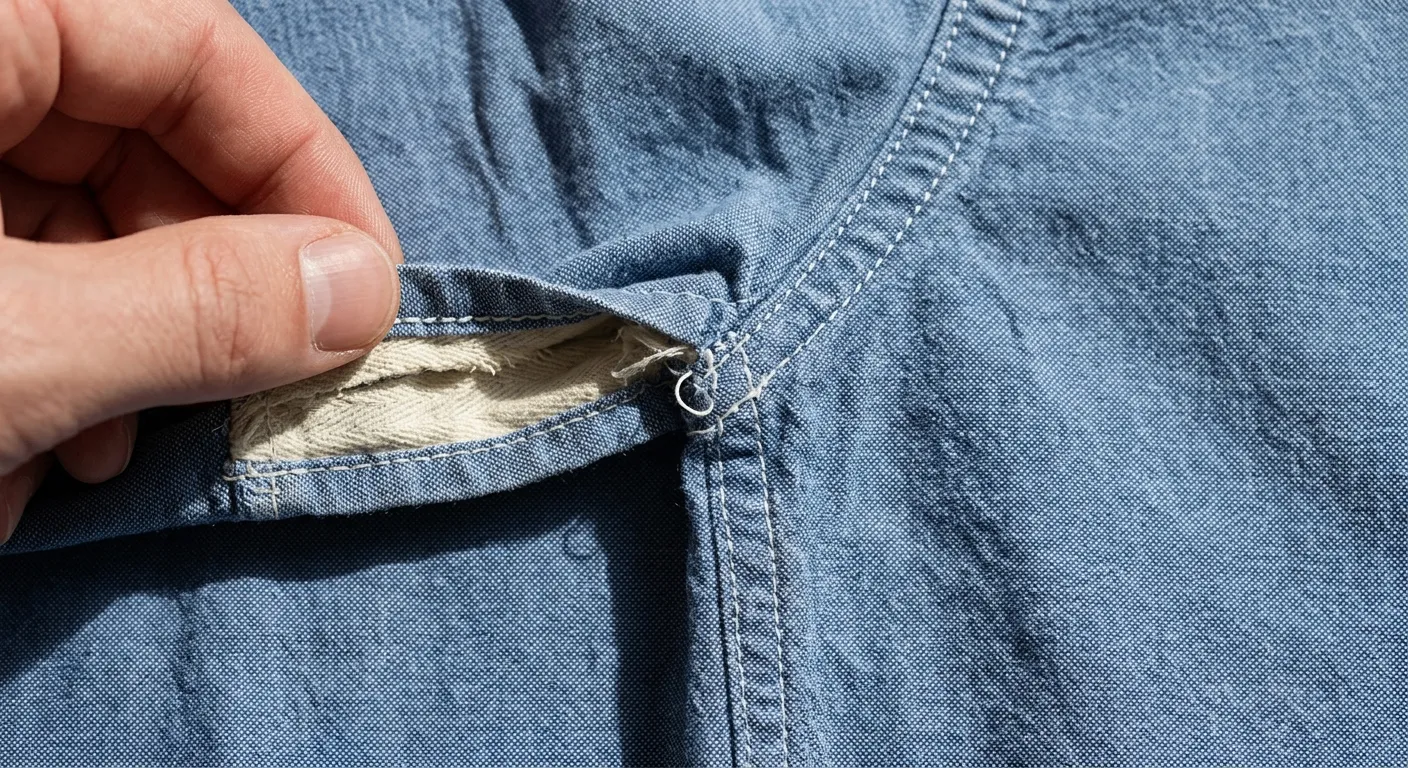
The first failure is usually a button, a seam, or a hem. Not the fabric. Fabrics made from quality fibers take years to break down under normal use. The construction goes first. Which means the investment in care almost never involves the material itself; it involves thread, hardware, and storage.
Washing intervals: Fine wool, worn next to skin, benefits from airing over a chair for twelve to twenty-four hours rather than washing after a single wear. Merino and cashmere can go two to four wears between washes in cooler months. Cotton shirts worn as a base layer over a t-shirt can go two to three wears. Washing at 30°C on a gentle cycle with a mild detergent causes less breakdown than washing at 60°C weekly. Cold water preserves dye and fiber integrity longer.
Storage: Wool hung for more than a week on a wire hanger develops a permanent shoulder divot. Use a wooden hanger with a broad shoulder. Knits don't go on hangers at all; fold them. A cedar block in the drawer discourages moths and costs under five dollars.
Leather footwear: A monthly rotation between two pairs extends the life of both by roughly double. Leather needs twenty-four hours to dry fully after a full day's wear; wearing the same shoes daily doesn't allow this. Cream polish restores moisture; wax polish creates surface protection. Use both, in that order, every six to eight weeks.
Mending: A loose button redone before it falls off takes two minutes. A fallen button takes finding the replacement. Seam splits at stress points, typically under the arm and at the back yoke, are fixable by hand with a curved needle and matching thread. A seam that splits and goes unaddressed becomes a tear.
A garment fails at the seam before the fabric. That's the place to watch.
Verdict: Spend twenty minutes once a season on this routine and the economics of buying less become real. A shirt that lasts eight years costs less per wear than one that lasts two, even at three times the price.


